Knauf Insulation · Building materials · International
6,000
professionals and 1,500 stores on one platform
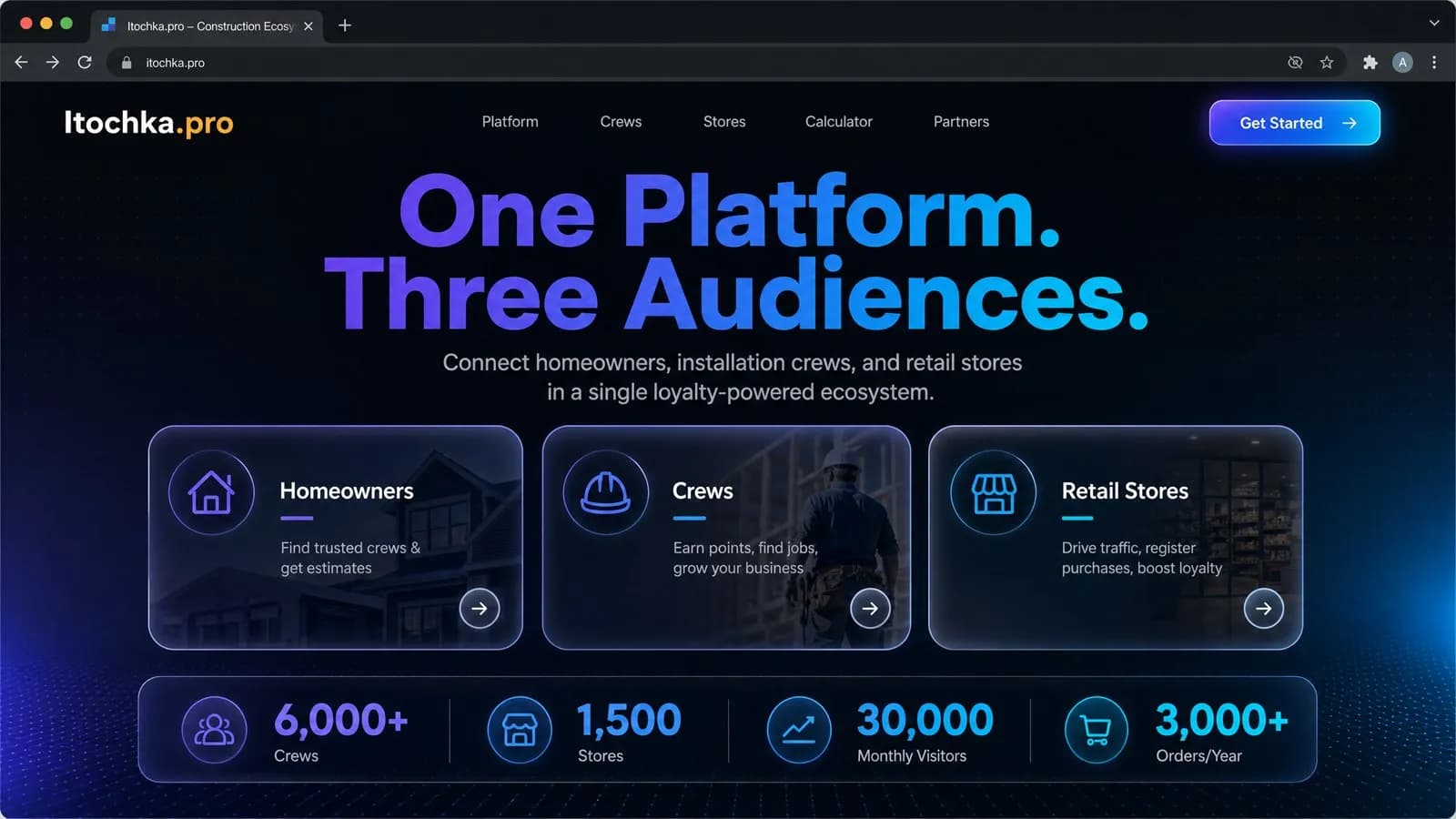
Three audiences. Nobody introduced them.
Staged: MVP → pilot → trial → production
Shape the marketMore salesSee the business

More sales
Fifteen minutes a call does not sound like much. Multiply it, then look at what your buyers would rather do.
Nobody in a manufacturing company thinks of a phone order as a cost. It's just a call. A customer rings, a salesperson writes it down, someone types it into the ERP, someone checks the price, someone confirms by email. Fifteen minutes, maybe twenty.
Multiply it.
Take a company that handles 25 repeat orders a week by phone, email or WhatsApp, at 15 minutes each, all in.
That figure excludes the order typed with the wrong item code, the price quoted from last year's list and the order taken at 8 pm because the customer only had time then. It excludes the cost to the customer, who also spent those fifteen minutes.
For one order type, at one company, it is not dramatic. For most manufacturers it is the floor, not the ceiling.
B2B buyers have changed faster than most sales processes.
61%
The gap between what buyers prefer and what many manufacturers offer is the opportunity.
This is not an argument for removing salespeople. The same research is clear about where people matter.
The split that works: repeat orders, reorders and stock checks go online. New customers, custom configurations and disputes stay with a person, who now has the time for them.
38% of companies don't sell online because of channel conflict: they are afraid of competing with their own dealers (McKinsey). The fear is reasonable. The answer is to build the portal for the dealers, not around them.
When we built Itochka.pro for Knauf Insulation, retailers were part of the platform from the start. They publish their store information, price lists and product range, and appear on a map so a homeowner can find the nearest outlet. 1,500 stores registered, and 70% of them actively record purchases. The full story is in Three audiences. Nobody introduced them.
That is a day of work, and it tells you whether a portal pays for itself before you spend anything on one.
Cost calculator
Related: Dealers order by WhatsApp. A portal should start there. · Why the first quote wins
Knauf Insulation · Building materials · International
6,000
professionals and 1,500 stores on one platform
Staged: MVP → pilot → trial → production
The same request. Very different answers.
Thirty minutes. You describe the pain and the result you want. We ask questions. If we can help, you get one email with what we found, what we'd build and what it costs. If we can't, we'll say so.